Eastbourne and Lewes scope housing decarbonisation

How Eastbourne and Lewes Councils are working with Clear Futures to address the long-term challenge of decarbonising their social housing stock.

Eastbourne and Lewes Councils engaged Clear Futures to conduct research, alongside Brighton University, into decarbonising their social housing stock. The research encompassed an additional six local authorities in the Sussex area to scope out bulk purchasing options.

Decarbonisation is a key area Clear Futures can help with, at a time when local authorities are stretched in their everyday obligations with now the additional pressure of meeting net-zero commitments.

For Eastbourne and Lewes, the decarbonisation research has looked at 40,000 homes and modelled the costs of potential interventions over a ten-year period to optimise programme delivery. For example, it has looked at solar PV installation and ground source heat pumps, taking into consideration the impact on residents who may welcome and need energy cost savings immediately but then may be faced with rising costs in the future. It has also calculated the potential savings if the council purchased materials in bulk and stored them until needed.

Clear Futures creates a long-term relationship

We wanted to change the way we interacted, because we know that if everybody is motivated by making it work and happen for the longer term you get better results. It is in the interest of Clear Futures to get it right and not to behave in a short-term fashion to try to get maximum value out of one contract.

Ian Fitzpatrick, Deputy Chief Executive and Director of Planning and Regeneration at Eastbourne and Lewes Councils

Committing to long-term partnerships also gives more certainty to the supply chain, encouraging investment in elements such as training, skills and research and development.

This approach incentivises investment in local skills development and gives certainty to local business to invest in growth. Taking a longer-term view is the most optimal way of delivery, if it is stop-start your local area won’t get the benefit. The seven councils in Sussex are spending £100m a year on our housing stock already and over a ten-year period we are going to spend £1bn by 2030. Clear Futures will make sure we can get the maximum benefits without sleepwalking into it – they will analyse and look at opportunities with us.

A ten-year horizon

Clear Futures will be operating well beyond ten years. As a long-term strategic partnership agreement, this makes a phenomenal difference. It gives us the opportunity to build the skills and education locally, create the local opportunity and concurrently achieve these long-term targets.

Helena Rivers, Director at Clear Futures and Director at AECOM

Other local authorities can use the partnership for transformative challenges in the built environment too – particularly those with an environmental and sustainability element. 

Supporting Bolton families at Christmas

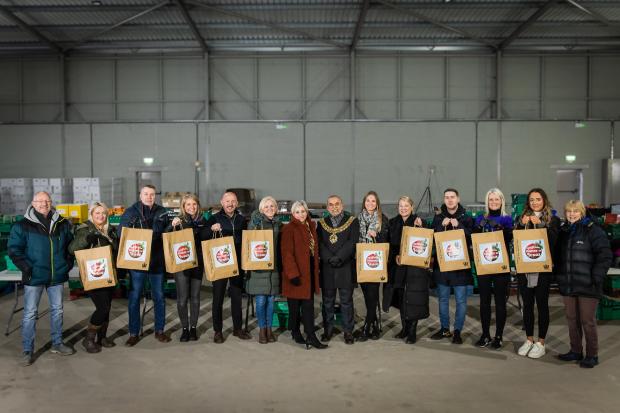
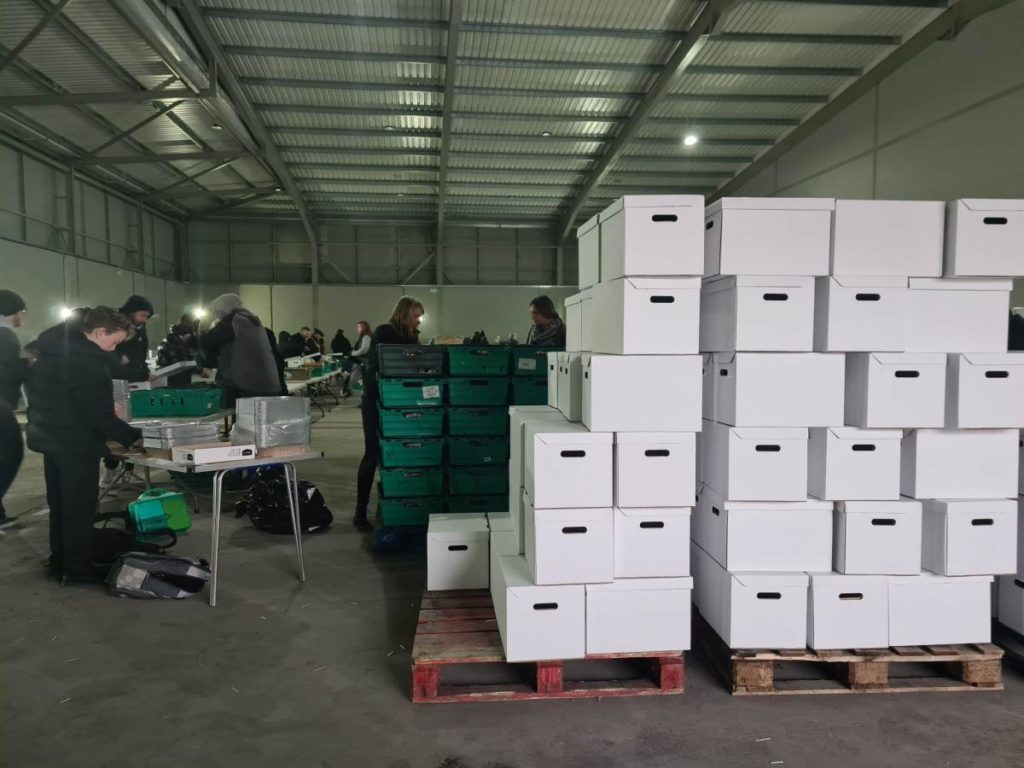
Clear Futures, along with Seddon, has given a helping hand to Bolton charity Urban Outreach, to deliver Christmas hampers that will feed more than 1,500 families.

Contractors Robertson Group, Eric Wright Group and Willmott Dixon in Bolton also turned up to offer their services.

Families are nominated for the hampers by someone such as a support working with them and the group then work to get them a hamper on two distribution days, including December 23, where a fresh option is included.

The fresh option is for families to enjoy Christmas day with fresh meat and fruit included along with chicken and sausages with halal options also available. The non fresh options included schloer, custard, gravy, chocolate mints, cranberry sauce, crisps and savoury crackers as well as pulling crackers for families to have fun.

Laura Bagley from Christmas Dinner On Jesus said: “We hope that it is something more than just food.

“Hopefully it will take out some of the worry and some of the stress of Christmas.

“I think what we hope most of all is that it has a much bigger impact such as the joy that comes from it and for people to know they can get help.

“We’ve worked on 600 in one day and it’s just over a third of what we need in total.

“We hope that it makes people feel less lonely and they realise that they are thought about and cared for.”

This is the eleventh year of Christmas Dinner With Jesus.

Laura said she had noticed more people needing help this year than other years as families were embarassed to ask for help if they had not been in a situation to need it.

She said: “Everybody is usually nominated as they don’t like to ask for help themselves and we are seeing in the current crisis that more people are needing this and we want to help take the worry away.

“We’re happy to do this and we want people to enjoy Christmas.”

Between April and September in 2021, 724 food parcels went out to children in Bolton, a 61 per cent rise from the year before.

With this figure set to rise yet again this year, the support Urban Outreach provides is becoming increasingly vital for many in the community.

This is a great charitable initiative from Seddon and Clear Futures. It was wonderful to see these two companies acting for the good of the community, especially at Christmas time.

Mayor of Bolton, Cllr Akhtar Zaman

Urban Outreach provides food for disadvantaged adults and young people in Bolton as well as support.

Nicola Hodkinson, owner and director of Seddon, said: “Community forms a key pillar of our values at Seddon. We have been based in and worked across the Bolton area for 125 years, making events like this one very close to our hearts. With families facing a cost-of-living crisis this year, the work that Urban Outreach is doing is invaluable to the community.”

Now more than ever it is so important to Clear Futures that we drive forward economic recovery and growth in our communities through the infrastructure projects and services we deliver.

Keith Edwards, Clear Futures Partnerships Director
Volunteers pack food hampers

Collaborative partnership generating social value in Bolton

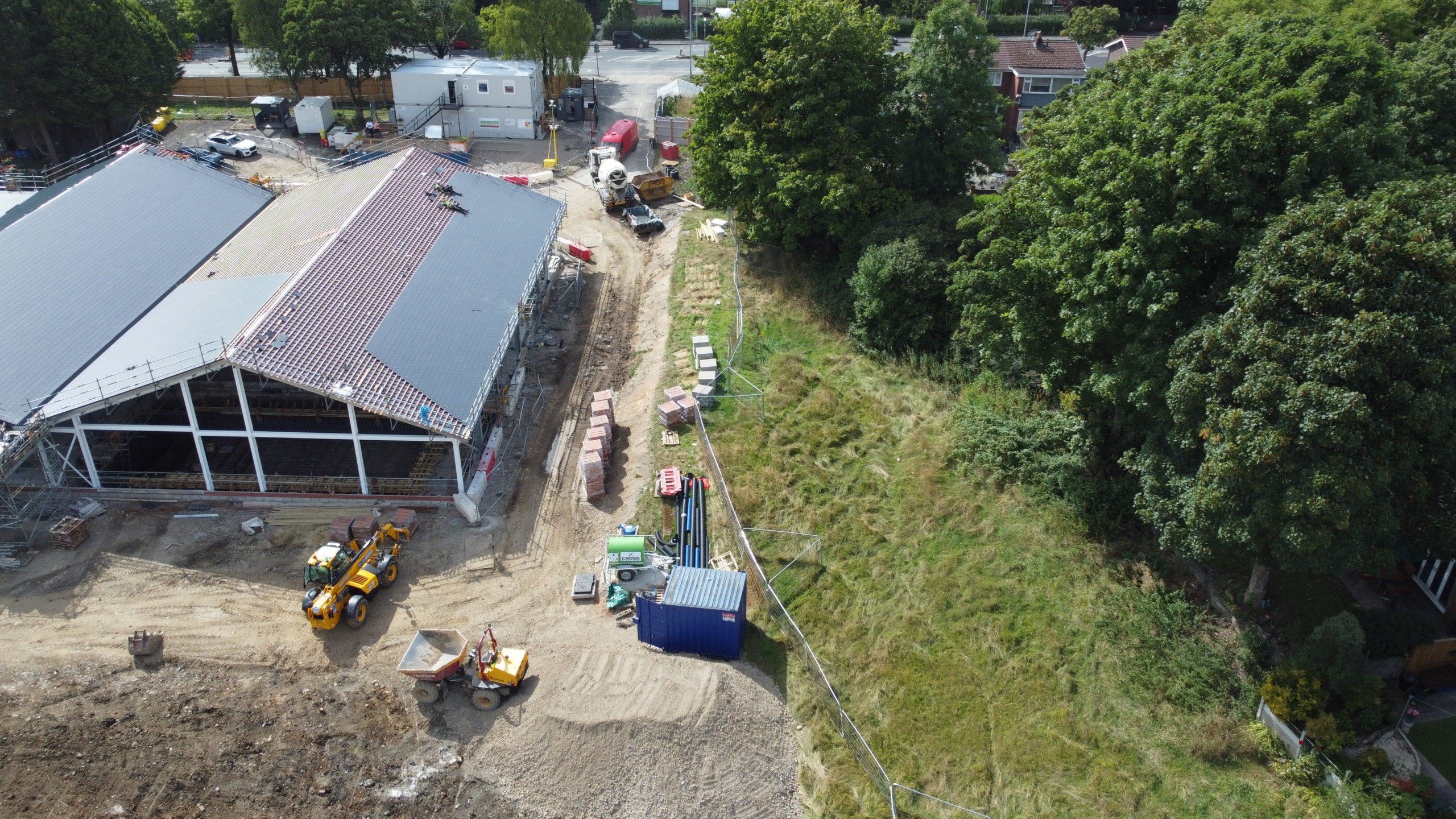
The new Jubilee Centre is being delivered in Bolton through a partnership between Clear Futures, Bolton Cares Ltd and Bolton Council. It will give much-needed support and opportunities for adults with learning disabilities in the town.

Watch to learn more about this facility, as well as how the Clear Futures partnership is delivering wider improvements across Bolton with local social value an integral part of every project.

Our strategic partnership with Bolton Council

Clear Futures and Bolton Council have been working in partnership since 2019 to boost the town centre’s role as a key player in the Greater Manchester economy. This is coupled with a wider aspiration to attract more high-growth companies that will create the additional jobs, knowledge, skills and technology needed to compete in a global economy.

See what we’ve achieved

Net Zero at a local level

Net zero at a local level: the scale of the challenge and the art of the possible in the built environment.

Reflections from the UK Partnerships Hub boardroom, sponsored by Clear Futures.

The conference took place on the 14th of June 2022 at the Marriott Worsley Park Hotel & Country Club, bringing together a collection of public sector guests, such as Matthew Vickerstaff from the IPA, Peter Reekie of SFT, and private sector representatives from the likes of Knight Frank and P2G.

The Clear Futures net zero retrofit lunchtime debate was attended by;

  • Jim Taylor, Clear Futures Non-executive Chair
  • Keith Edwards, Clear Futures Partnership Director
  • Dr John Hindley, TwelveTrees Consulting Director
  • Jeya Sivasubramaniam, SNRG Head of Growth
  • Sean Owen, GMCA Head of Low Carbon
  • Nigel Badham, Knight Frank Partner

The key message to come out of the discussions was clear: the public sector cannot reach net zero on its own and collaboration is essential. Local government especially, does not have the capacity or resources needed to deliver decarbonisation programmes as well as its day-to-day responsibilities.

Bringing capabilities together to unlock public sector decarbonisation challenges

Collaboration of political, public and private sector efforts is needed to deliver the requirements of net zero – with the private sector helping meet some of the key gaps the public sector faces in terms of resource, green skills, investment and more.

Integrated approaches such as partnership delivery models – Clear Futures and Go Neutral are two examples – bring collective groups of experts and stakeholders to the table at an early stage. This type of engagement gives local authorities an understanding of not only what they need from their projects and programmes, but exactly what is achievable and what options are realistic.

Consider this example: through its partnership with Bolton Council, Clear Futures brought together multiple public sector organisations to develop a potential heat network solution they could all use. Keith Edwards, Partnership Director for the Bolton Partnership, explained that this resulted from “using the team on the ground to fully understand the priorities, then linking that back up to the strategic management plan”.

This approach was welcomed by public sector attendees who agreed that the main hurdle to overcome is the initial development of a project – defining the needs and vision, and a project brief that can be delivered and moves public sector bodies to a point where they can engage with the private sector.

But the obstacles are not one-sided. There was also discussion around barriers the private sector faces when engaging with the public sector. Such as the complexity of retrofitting public buildings, and decarbonisation programmes across estates that have complicated ownership and management – the education sector being a prime example. So a more accessible interface is a necessity if we’re to engage with organisations from central and local government and bring together interested parties to discuss how they can work together.

Looking at new investment models to accelerate delivery

New and creative models are being developed across the private sector. But with few recognised examples of these working at a local government level to deliver tangible retrofit programmes, there remains some apprehension within the public sector about this approach.

But there is clear appetite amongst private sector guests around investment opportunities and innovative models, appreciating the potential and scale of investment needed to reach net zero by 2050 in the UK.

SNRG is a Centrica and Antin backed developer of smart local energy systems that support the transition to zero carbon. Through aggregating technology, they maximise the use of locally generated renewable energy and provide an end-to-end service designing, funding, building and operating SmartGrid solutions. This substantially reduces the risk, cost, carbon, and complexity for residential, industrial and commercial, and public sector clients, residents and occupants. 

Clear Futures has the capabilities to work with public sector partners to identify the best-fit investment model for specific opportunities, connecting with a range of investors to bring together the investment required to unlock a project or programme into delivery.

Similarly, the Go Neutral framework procured by GMCA and its ‘Integrated Smart Energy Solutions’ is geared to third party funded opportunities with the flexibility for shared investment and revenue under the contract structure.

The unclear benefits of decarbonisation

There’s still work to be done to debunk myths around net zero and what it means in real terms. To overcome scepticism around the revenue benefit of decarbonisation measures, clearer messaging and case studies are needed to demonstrate the reality of payback and cost savings achieved.

The Net Zero Estate Playbook published by government sets out the ‘No Regret’ principle to protect public spend and make sure the investment in net zero is worthwhile. But more work needs to be done to promote the efficiencies that can be delivered. Certain measures such as solar PV can take as little as five years to achieve payback and see the efficiencies realised.

Addressing the green skills challenge to unlock opportunities

Green skills and supply chain challenges were discussed as many have struggled to find the necessary capabilities to deliver programmes, especially those more complex such as social housing retrofit.

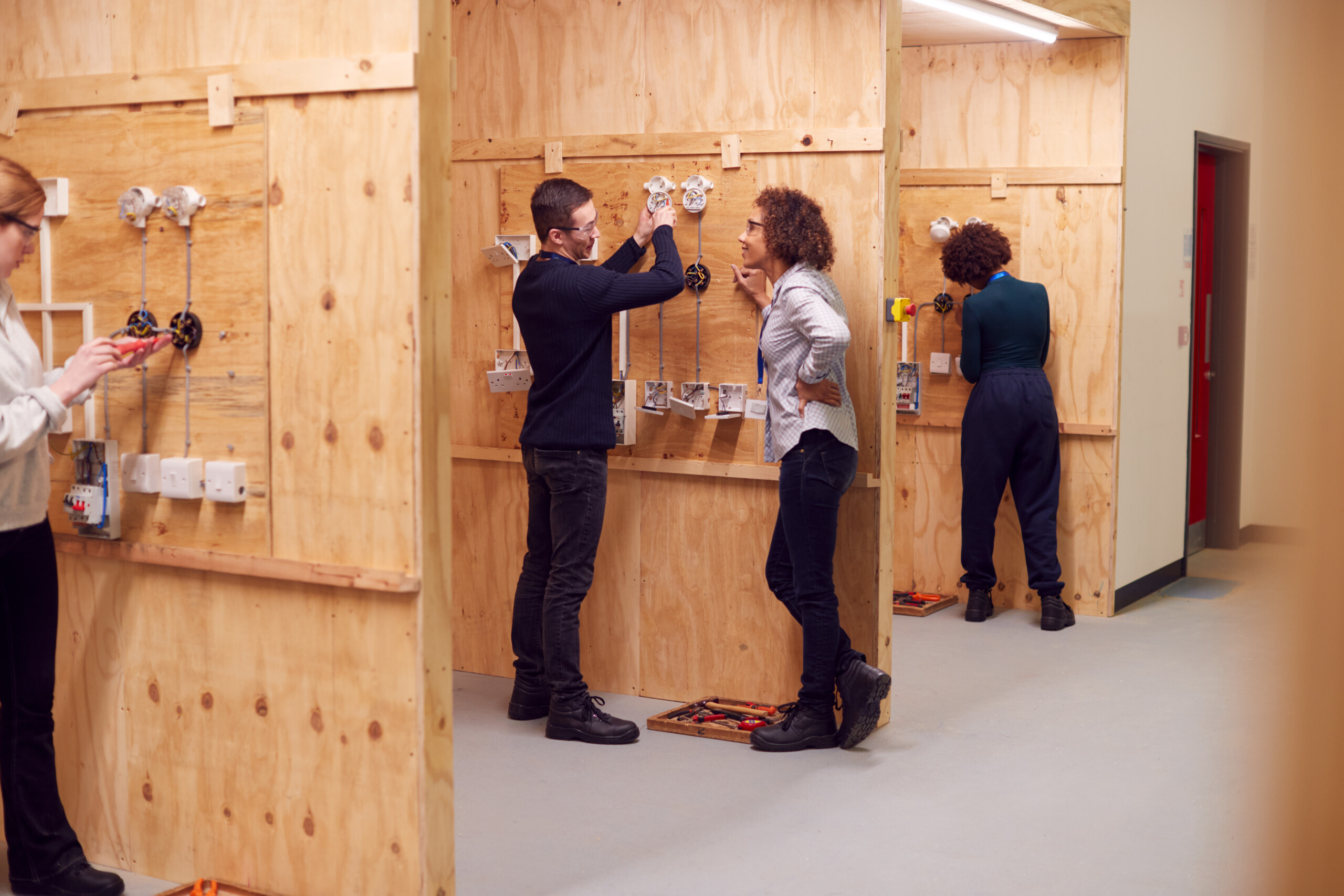
One key way to overcome the green skills shortage is through a joined-up approach – whereby the public and private sectors come together to better understand where there are gaps and work with local education organisations to develop upskilling and training programmes.

The Go Neutral framework uses local supply chain partners to support SMEs and the growth of green skills, taking advantage of upskilling provisions and programmes such as the GMCA Skills for Growth programme and Green Spaces fund.

Debating the cost of reaching net zero

While funding such as the PSDS scheme has provided opportunity for the public sector, the reality of differing and sometimes competing grants means there’s no overarching, well-considered strategic approach to decarbonisation measures.

With bids typically having tight deadlines for the business case, it becomes a massive undertaking for a local authority without a net zero strategy to identify which projects to put forward for funding.

The result? Rushed bids that focus on one-off projects which will improve the efficiency of a small number of assets – but ignore the bigger picture and wider retrofit challenge.

Taking a more holistic approach across an estate, i.e. looking at longer-term solutions, can provide better benefits. But the greater the complexity of measures, such as heat networks or smart energy grids, the longer to develop a business case for funding. So more often than not, these opportunities are missed.

One public sector speaker noted “Authorities should not chase the money. If they become an informed client, they can then decide if the money fits the outcomes and objectives they want to achieve”.

PFI contracts and the latent resource

Lack of collaboration between customers and their PFI providers means there’s often no agreement on using the resource in a contract to decarbonise public sector assets. Again, real opportunities are being missed here: proactive engagement with the mechanisms in PFI contracts and lifecycle funds can identify ways to invest in measures that deliver long term benefits for the operation and maintenance of an asset.

Increasing efficiencies through behavioural change

Another easy win from a more joined-up approach around sustainability and FM delivery is around behavioural change. By engaging with end users, we can achieve greater energy savings and carbon reduction – a simple but effective step. One local authority noted how they introduced office employees to the building management team who explained how the building worked and ways occupants could play their part in ensuring it operated at optimum efficiency.

Through the PSDS projects Clear Futures delivered with Bolton Council, activities were put in place to upskill the council’s internal teams. Experts including AECOM and Vital Energi were asked to support feasibility and assessment of council buildings. The result of this experience and knowledge sharing means the council team now have a much better understanding of how to use buildings more efficiently, as well as retrofitting and decarbonisation projects.

Levelling up the UK: building an agenda for the North

Published 19 September 2022

In February 2022, the UK government published its white paper ‘Levelling Up the United Kingdom’. The paper highlights some of the key challenges shared across the public sector and covers four broad areas: boosting productivity and living standards, spreading opportunities and improving public services, restoring community and local pride, and empowering local leaders.

We must level up locally to succeed

Essentially, ‘Levelling up’ is about people, and opportunities for wider communities and economies to benefit, grow and flourish. Within the private sector, we need to get better at harnessing the value of our investment for the good of the communities we operate within.  

Local focus is key to ensuring we achieve a level playing field, investing in places and their people to support sustainable, inclusive growth that creates the best opportunities for our communities. Social value and sustainability are vital to driving wealth-building activity that will continue to improve the lives of UK communities – now and in the future. 

How do we change the levelling-up dynamics?

Years of division between the North and South has created a culture of competition and secrecy between places. The way investment has previously been led has resulted in towns and cities bidding against each other, increasing the divide between neighbouring places in their fight for survival. 

So we must change the way we work. Instead of following policy and waiting for drips of funding, we need to work together and collaborate to redistribute prosperity across the UK. 

Progress driven through public-private partnerships

Public and private sector partnerships can alleviate constrained public finances and provide capital investment to deliver major projects and programmes that would otherwise be delayed. Take climate change – arguably the biggest challenge of our time but one where public and private sector actors can align their interests around a common goal. And the investment of capital and skills by the private sector can give public sector organisations the capacity to deliver on their green agendas. 

The Public Sector Decarbonisation Scheme is a key example. Clear Futures has worked with the in-house teams of multiple local authorities in the north west of England, providing support for funding applications that will enable them to decarbonise their existing estate. Following Round 1, we secured over £10m of Salix funding to deliver decarbonisation projects for three councils – Tameside, Stockport and Bolton – resulting in:

£150,367
in financial savings
1,296
tonnes of carbon saved annually
18,499
tonnes of lifetime carbon savings

This work continues. We’re currently supporting more public sector bodies preparing funding applications for PSDS 3B that closes in September 2022 through estate data assessment, feasibility studies, site surveys, payback calculations and more.

And as a fully compliant procurement route and delivery vehicle, we have the capability to help the public sector successfully deliver these projects too.

Key outcomes: 

  • Providing local authorities with additional capacity and resource to accelerate their bid application to meet tight deadlines. 
  • Increased understanding within each local authority about the condition of their public sector assets. 
  • Comprehensive decarbonisation strategies and business cases for projects. 
  • Project and programme management support with a proposed vehicle and route to deliver. 
  • Green upskilling of local authority teams learning from private sector experts. 
  • Local growth and spend through local supply chain engagement to deliver projects. 

If we’re to deliver on the UK’s net zero commitments, local and national government must work together to create public-private investment opportunities which help the public sector press ahead with activities to achieve local net zero. 

The private sector has a responsibility to invest in places and local infrastructure

It is vital to Clear Futures that we have a positive impact in a place long after we have handed over a new facility or completed decarbonisation works across a public sector estate for instance. We want to see that we have delivered more than a project brief, such as creating employment opportunities for a young person or someone experiencing barriers to employment with their first step on the job ladder because we understand how vital that experience is.

Our partnerships also have set targets for local spend to ensure we keep public spend local and invest in local businesses and SMEs. In a recent Facilities Management contract we delivered to Bolton Council, over 80% of spend was within 15 miles of the town hall.

We strive to provide sustainable pipelines of work opportunities for local businesses so they have sight of upcoming work and the opportunity to grow. And we work closely with SMEs to expand their business, supporting them to develop their operations and access wider opportunities – through the likes of workshops with local businesses to engage them on work opportunities and supporting local organisations in their mission of driving inclusion and diversity within the construction industry.

Final thoughts

It’s not a one size fits all and our solutions need to be flexible and pragmatic to meet the constantly changing needs and opportunities across the public sector – every place will hold its own unique priorities, but through true collaboration and a joined-up whole systems approach we can enact the change needed to solve local challenges.

Instead of competing for funding, let’s work together to create public private investment opportunities that will unlock and drive value from public assets. Instead of leveraging our insights and knowledge regarding how best to understand our public sector estate – lets join up in our approach to reducing our carbon footprint so we can develop the best solution and reach net zero targets as sustainably and quickly as possible.

Richard Airey, Partnership Lead with Clear Futures

Richard Airey, Partnership Lead

Richard oversees all the general operations of joint ventures, working closely with our new participants.

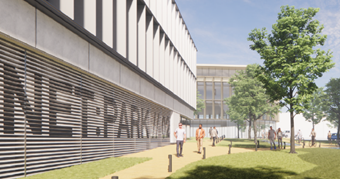
Clear Futures helps NETPark achieve planning for Phase 3 of development

Detailed planning has been granted for the third phase of development at NETPark (the North East Technology Park) following assistance provided to Durham County Council and Business Durham by Clear Futures. Clear Futures has been working with the NETPark team since April 2021 providing strategic support services.

The Sedgefield-based project is set create up to 1,250 highly-skilled STEM jobs and support 2,200 more through the local supply chain for businesses based in the technology park. It is anticipated that NETPark will contribute over £625m to the County Durham economy.

Clear Futures worked in partnership with the Council to help secure the required funding for the project, which will deliver more than 18,600 sqm of additional space to accommodate growing demand from the thriving businesses located at NETPark and potential new start-ups.

Clear Futures will continue to work with Business Durham and the council to progress the project through the next phases of development and project delivery.

Image by Ryder Architecture